A setup companion for Linux newcomers

Spend less time hunting for setup guides.

Startux puts common first-week jobs in one place. Find useful apps, set up a secondary drive, prepare your gaming tools, follow focused repair guides, or ask for help in plain language.

Preview ready. First signed app release still pending.
Install command Linux, amd64 or arm64
curl -fsSL https://startux.app/go | bash

The command is ready to copy, but there is no public app release behind it yet. The installer fails closed until signed release files are published. See what it will install.

  • Free and open source
  • No Startux account
  • No telemetry or tracking

Useful from day one

The jobs that send new users searching across ten tabs

Startux does not replace your distribution. It gives you a clearer way to use the tools already available on your system.

Apps

A smaller catalog with useful choices

Browse a curated catalog from Year of the Linux Desktop. Startux chooses between Flatpak, your native package manager, Homebrew, and reviewed AppImages according to your system and preferences. You can see the chosen source before the task runs.

Drives

Make a secondary drive stay mounted

Pick a detected drive, choose a mount preset, and give it a readable name. Startux uses stable device identity, protects fstab changes with backups, and can restore those backups after administrator approval.

Gaming

Prepare the usual gaming stack

Set up Steam, Lutris, Heroic, MangoHud, and GameMode in one guided run. Each component reports its own result, so a partial failure never appears as a successful setup.

Graphics

Know what driver is actually active

See each GPU, its active driver, known VRAM, and Vulkan status. Detected NVIDIA systems get distro-specific guidance with a proprietary path and a clearly limited open NVK option. NVK can trail gaming performance, DLSS remains experimental, OpenGL uses Zink, and it has no CUDA for local AI. Atomic-system drivers are reported but never changed.

Ask Tux

Explain the problem in your own words

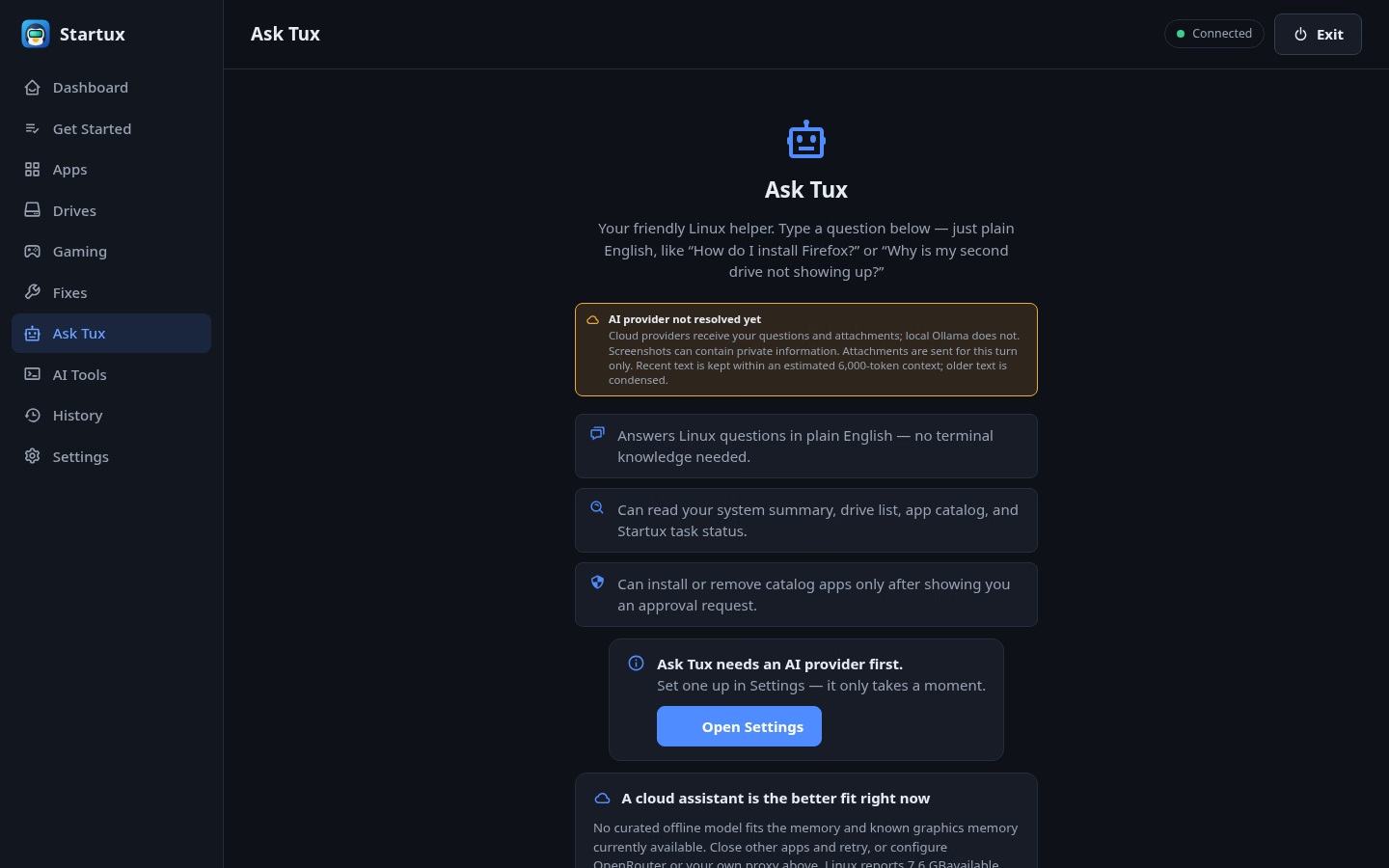
Ask Tux can use a bounded system summary, app catalog, drive list, and task status. It can suggest and run only its defined tools, and app changes need your approval. Choose local Ollama, OpenRouter with your own OpenRouter API key, or a compatible proxy. Screenshots are attached for one turn only.

Fixes

Focused runbooks, not a mystery repair button

Follow plain-language guides for selected package, Flatpak, sound, update, and cleanup problems. Each guide explains its scope, records commands and results, and gives recovery advice for that operation.

Get Started

A checklist that remembers your progress

Work through updates, software sources, everyday apps, drives, and gaming at your own pace. Finished items stay checked after you close the app.

Distribution aware

Uses the package system you already have

Startux detects these major Linux families and selects the matching backend. Safe detection and selection paths are covered in automated tests. The real desktop and release-install matrix is still part of the release-candidate work.

  • Debian and Ubuntuapt and Flatpak
  • Fedora and RHELdnf and Flatpak
  • Arch Linuxpacman and Flatpak
  • openSUSEzypper and Flatpak

Atomic desktops

Bazzite, Silverblue, Kinoite, and related systems

Startux prefers Flatpak, AppImage, or Homebrew when they fit. If a system package must be layered, it uses rpm-ostree and reports that a restart is required. It does not rewrite the base image or change graphics drivers on atomic systems.

The actual app

A calm interface with the details close by

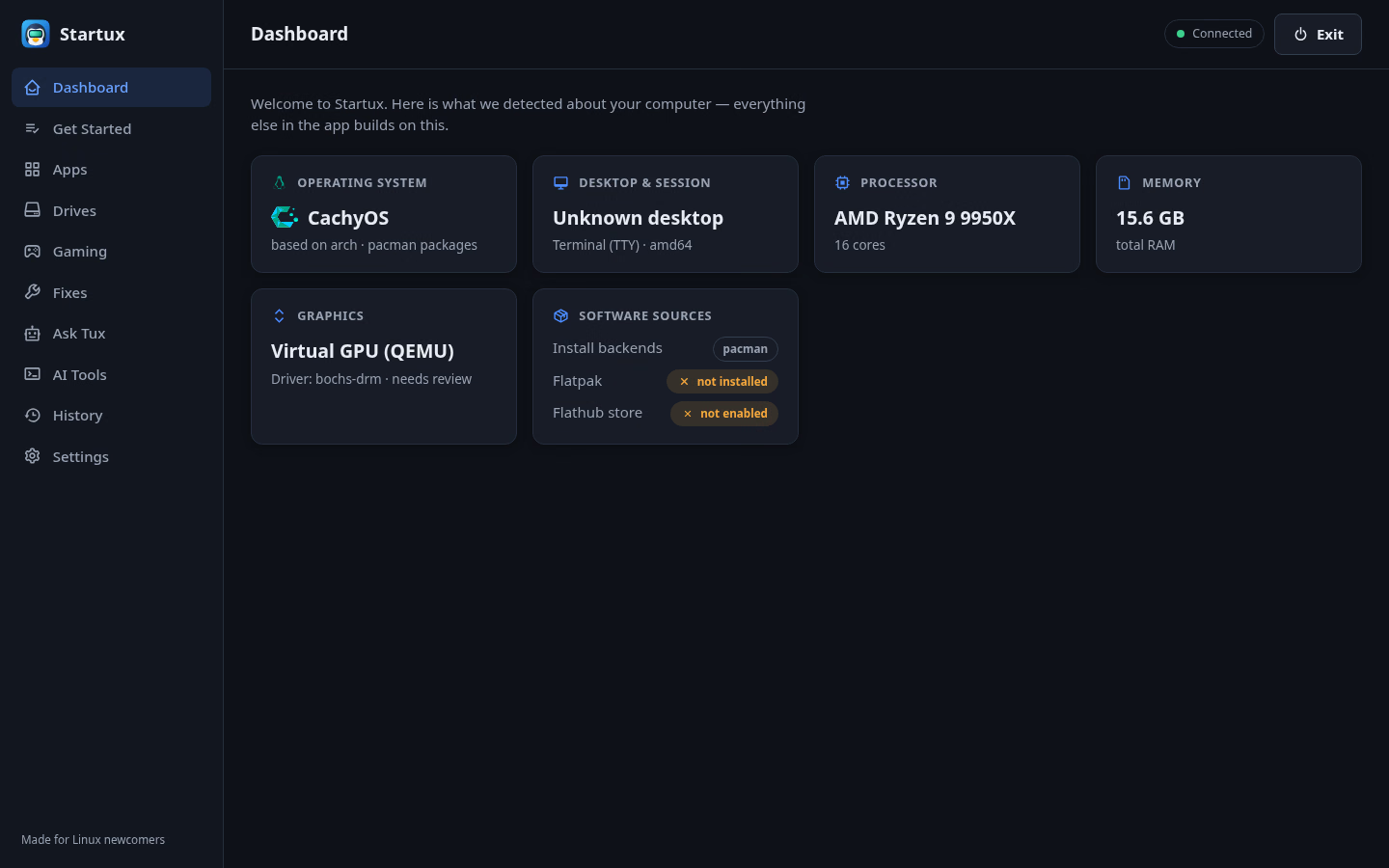
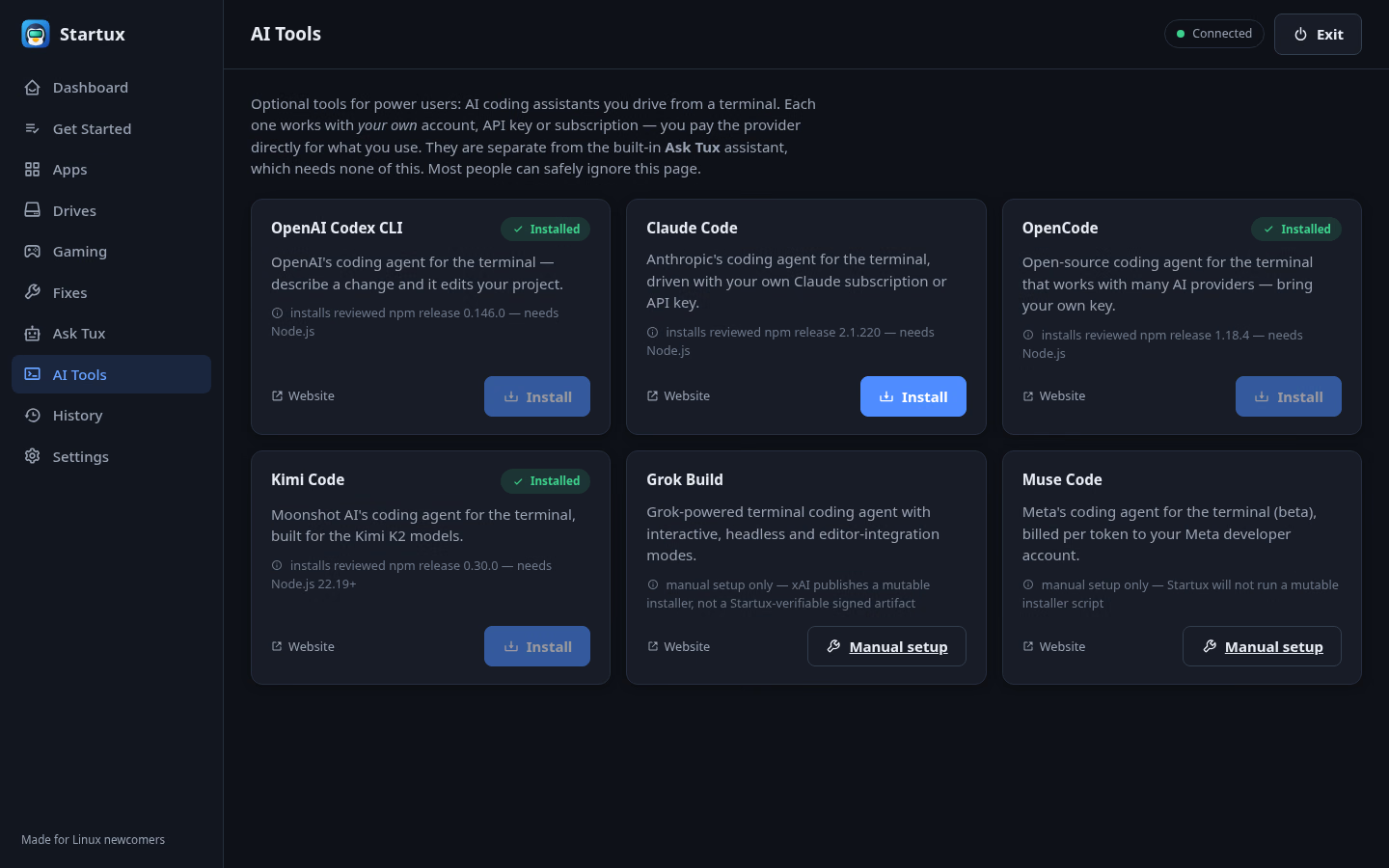
The desktop interface runs locally and opens in your browser. The same task engine also powers the terminal UI and CLI.

Clear boundaries

Know when Startux needs access

01

Runs as your desktop user

The app, local server, and everyday tasks do not run as root. Installing Startux itself writes only inside your home folder.

02

Asks before protected drive work

Drive changes use a fixed, root-owned helper and your desktop's authorization prompt. The first helper setup is a disclosed trust-on-first-use step and refuses to replace an existing helper.

03

Keeps a task record

Commands, outcomes, partial completion, and recovery guidance go into a bounded user-only task history. Secrets are redacted.

Install

One command, once the signed release is published

Open a terminal, paste the command, and press Enter. You can read the installer at startux.app/go before running it.

curl -fsSL https://startux.app/go | bash

The endpoint is live. The first signed application release is not published yet, so the installer currently stops without changing your system.

  1. Detect the processor. Select the amd64 or arm64 release.
  2. Verify the download. Check the manifest and binary against the project minisign key, then enforce signed size and SHA-256 values.
  3. Install atomically. Place the binary in ~/.local/bin and retain one previous executable on update.
  4. Add the app-menu entry. Install the desktop file and scalable Startux icon in your home folder.

FAQ

Short answers to sensible questions

Startux can make routine setup clearer. It cannot make every Linux change risk free or repair every possible system state.

Which distributions does it understand?

Startux detects Debian and Ubuntu, Fedora and RHEL, Arch, and openSUSE families. It also recognizes atomic Fedora variants such as Bazzite and Silverblue. Each feature still depends on the packages and capabilities available on the detected system.

Is piping the installer into bash safe?

Reading a script before running it is a good habit. The installer is public and commented. It downloads a release manifest and binary, verifies both with the embedded production key, checks the signed byte size and SHA-256, then installs in your home folder. It does not ask for administrator rights. Direct release downloads are available if you prefer not to pipe a script.

What leaves my computer?

Startux has no telemetry and no Startux account. It fetches its signed catalog and configuration from startux.app. Package work contacts the selected repository or vendor. Ordinary connection details such as your IP address are visible to those services.

ActionRecipientSent
Launch or browse appsstartux.appCatalog and AI-default requests. No chat, keys, history, or hardware report.
Install or set up softwareChosen repository or vendorArtifact request and normal connection metadata.
Ask Tux with OpenRouteropenrouter.aiYour key, bounded chat context, current-turn screenshots, tool definitions, and bounded results.
Ask Tux with a proxyYour configured endpointThe same chat and tool data, plus an optional proxy key.
Ask Tux locallyOllama on this computerChat and current-turn screenshots over loopback. Model setup still downloads files.

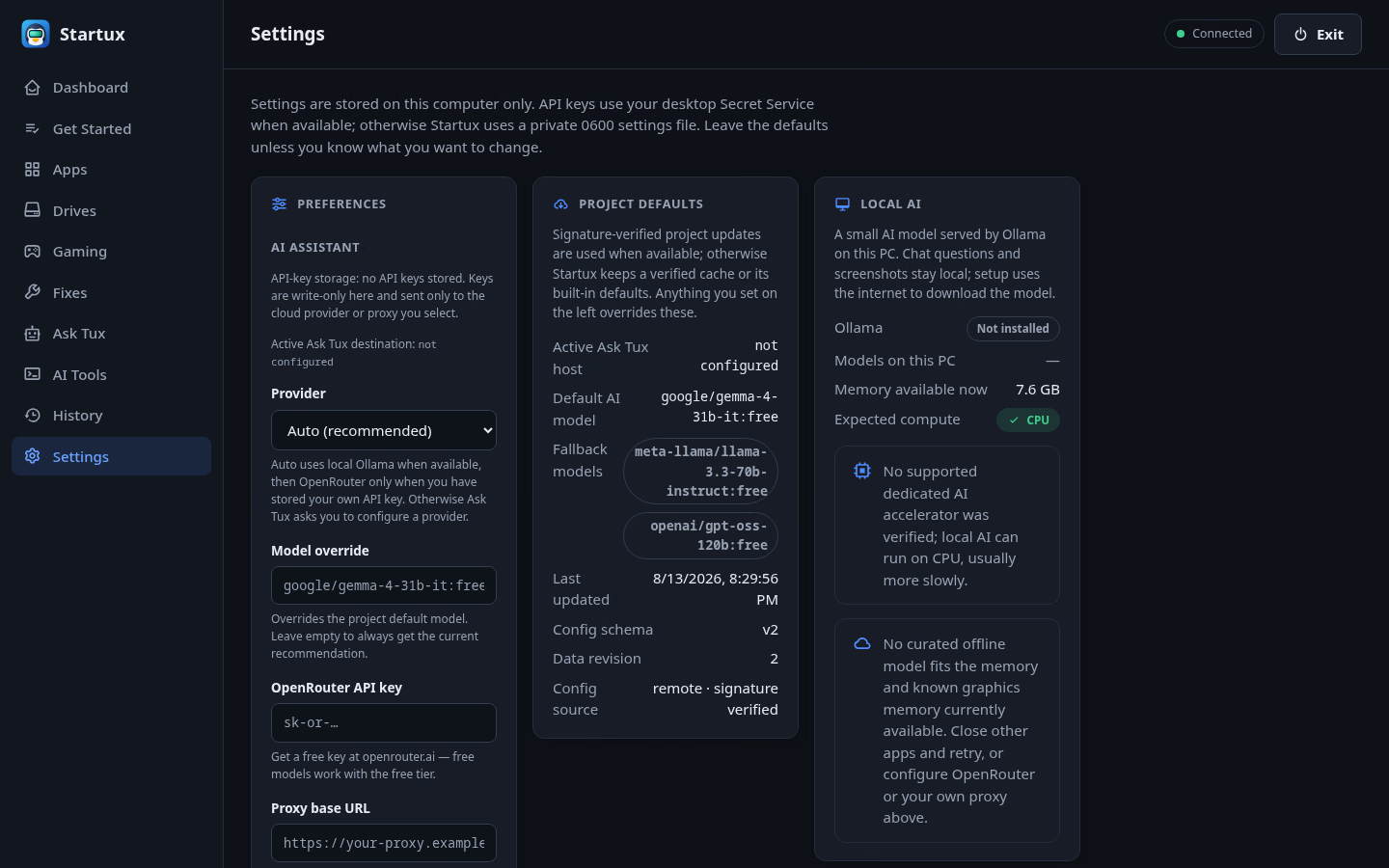
Screenshots can expose names, messages, filenames, account details, and secrets. Crop or redact them first. OpenRouter requires your own OpenRouter account and API key. Keys prefer your desktop keyring. If it is unavailable, Startux tells you before using a user-only settings file. There is no in-app global offline switch. See the full privacy and local-data guide.

What happens if a task fails?

Tasks report the failed step and operation-specific recovery advice. Persistent drive-mount changes create a protected fstab backup and attempt rollback on failure. Startux can list and restore those backups after authorization. Other package and configuration tasks do not have a universal backup or undo button.

Does Startux cost anything?

No. The app, installer, and website are open source under the MIT license. Ask Tux can run with local Ollama. OpenRouter use requires your own account and may have provider costs. There is no supporter plan or hosted Startux model to buy today.

Open source

Read it, question it, improve it

Startux is MIT licensed. The application and this website are developed in public, including the installer, task engine, release checks, and catalog publication tools.